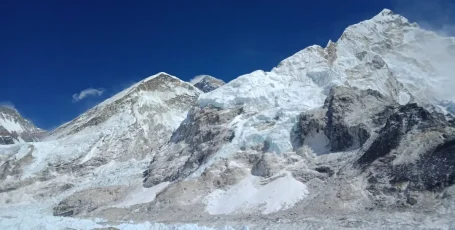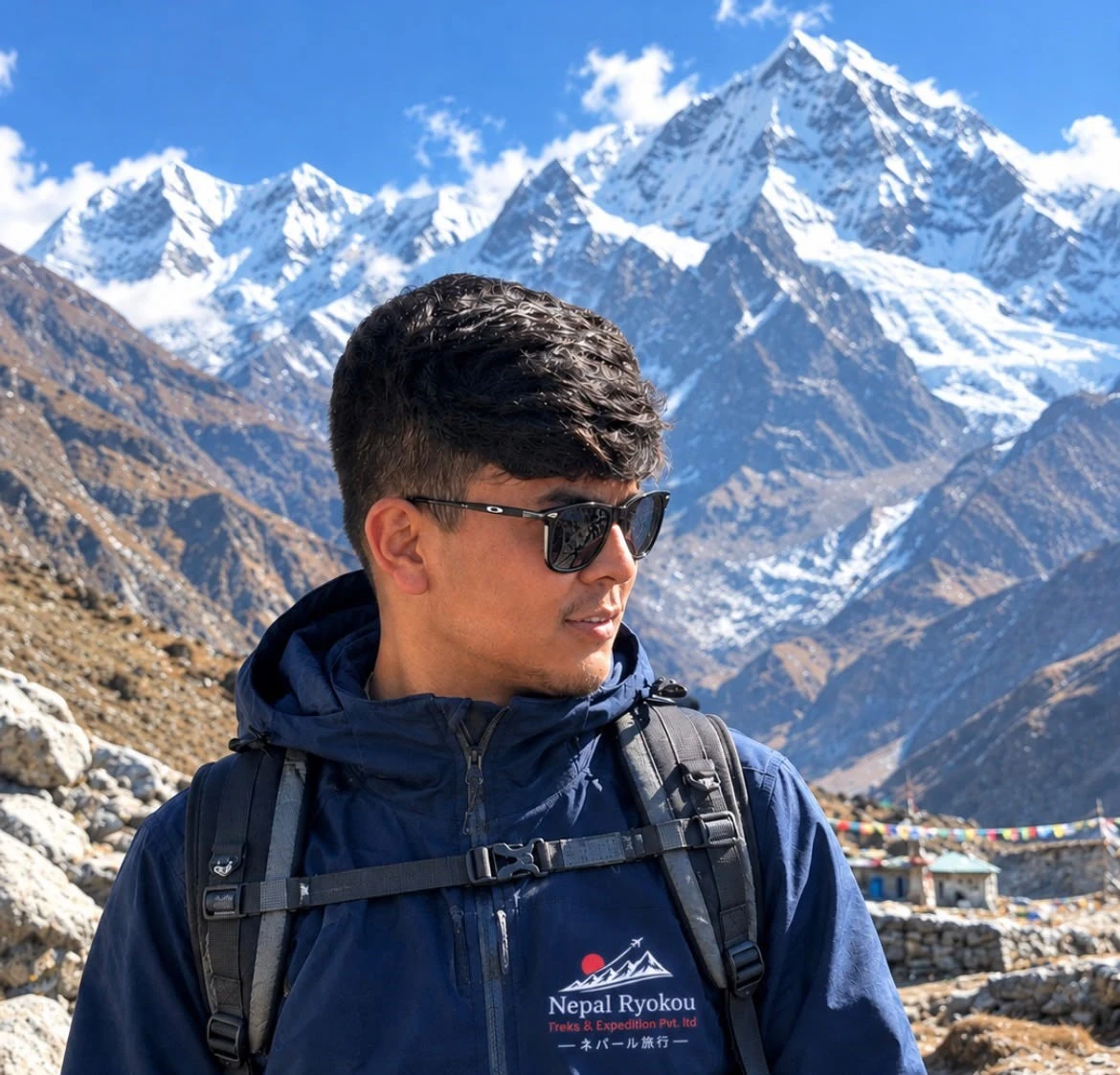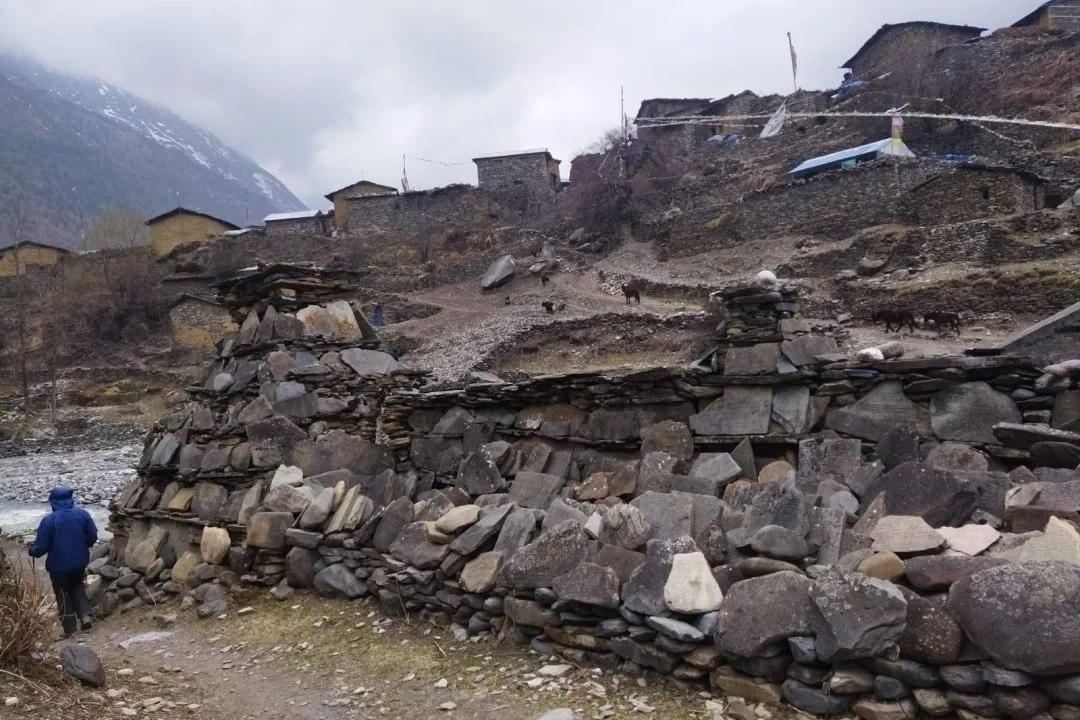
The Manaslu and Tsum Valley Trek is an 18-day teahouse journey that brings trekkers close to Mt. Manaslu (8,163m), the eighth-highest peak in the world, through the mystical Tsum Valley. This area, rich in history and culture, offers a unique experience.
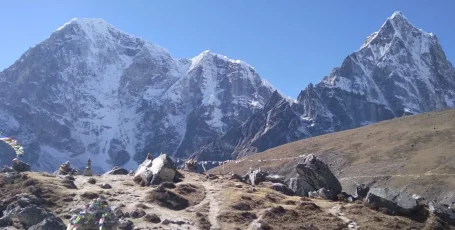
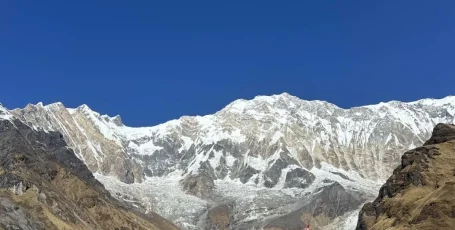
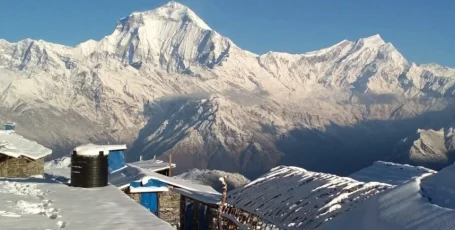
Tsum Valley, a sacred destination for pilgrims, adds to the trek’s appeal with its preserved Tibetan Buddhist traditions and lifestyle. The area remains untouched by modern developments, allowing trekkers to experience the deep-rooted customs of Tibetan Buddhism, including daily rituals and practices. The trek is set in a stunning landscape filled with Buddhist monasteries and nunneries, spinning prayer wheels, and the echoing sound of Tibetan horns, making it one of Nepal’s most diverse cultural treasures. The region’s beauty is enhanced by its patchwork meadows, terraced fields, and the towering Ganesh Himal, providing an idyllic and serene environment.
The journey starts from Kathmandu, with a drive to Machha Khola, where the trek officially begins. You’ll pass through the Budhi Gandaki River valley, moving through terraced fields and small villages. As you trek to Tatopani, you’ll enjoy the forested paths and eventually relax in a hot spring spa. Continuing on the trail to Philim, you’ll be treated to views of Sringi Himal. After crossing Chumling, the trail leads to Chhokang Paro in the Upper Tsum Valley, where you can enjoy breathtaking views of Ganesh Himal, Boudha Himal, and Himal Chuli. Your next stop is the sacred Piren Phu (pigeon cave), where you’ll see Buddhist art, inscriptions, and carved stones, before reaching Nile/Chhule for exploration.
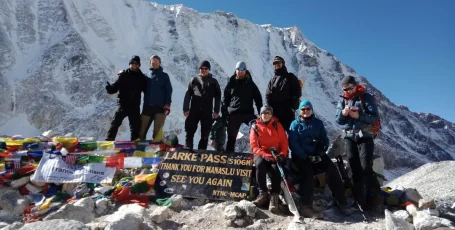
Next, you’ll visit Mu Gompa, located at an altitude of 3700 meters, before moving on to Rachen Gompa, a nunnery. The trek continues through pine and rhododendron forests, reaching Gumba Lungdang, and then you’ll head to Ganesh Himal Base Camp. From there, you’ll journey to Lokpa, which has limited facilities, then onward through Gurung and Thakali villages, passing through Ghap to Lho. You’ll take a rest day in Samagaon, then ascend towards Samdo, Dharmasala, and finally, Bhimtang, where you’ll cross the Larkya La pass at 5,160 meters. The trek ends with a descent to Dharapani, from where you’ll take a public bus back to Kathmandu, concluding the trek.
Nepal Ryokou offers a meticulously designed 18-day Manaslu Tsum Valley Trek itinerary, including arrival and departure days in Nepal. With local expertise and a commitment to personalized service, we aim to provide an unforgettable journey through the stunning landscapes of Nepal. If you have questions about the trek’s cost or itinerary, feel free to get in touch.
| Trekking Route | Distance (Kilometers) | Duration (Hours) | Altitude (Meters) |
| Machha Khola to Jagat | 22 | 7 to 8 | 1340 |
| Jagat to Lokpa | 22 | 7 to 8 | 2240 |
| Lokpa to Chumling | 6.3 | 4 to 5 | 2386 |
| Chumling to Rachen Gompa | 10.2 | 6 to 7 | 3240 |
| Rachen Gompa to Mu Gumpa | 12 | 6 to 7 | 3700 |
| Nile to Chumling | 12 | 5 to 6 | 2386 |
| Chumling to Deng | 15 | 8 to 9 | 1860 |
| Deng to Namrung | 19 | 6 to 7 | 2630 |
| Namrung to Lho | 11 | 4 to 5 | 3180 |
| Lho to Samagaon | 7 | 3 to 4 | 3520 |
| Samagaon to Samdo | 9 | 3 to 4 | 3860 |
| Samdo to Larkya Phedi | 8 to 9 | 3 to 4 | 4480 |
| Larkya Phedi to Bhimthang via Larkya La Pass | 24.7 | 8 to 9 | 5160 |
| Bhimthang to Tilche | 26 | 8 to 9 | 2560 |
Mountain trekking demands significant endurance and strength, both of which can be developed through consistent physical training. To get ready for an adventure like the Manaslu Tsum Valley Trek, it’s highly recommended to engage in regular workouts, hiking, running, or gym sessions. Activities like walking, running, swimming, or cycling four to five times a week will help train your body to manage breathing efficiently. Additionally, practicing hikes for 5 to 7 hours on local trails or small hills with minimal rest is a great way to prepare.
The Manaslu Tsum Valley Trek is considered physically challenging, requiring participants to be in solid shape to enjoy the journey. With daily hikes over rugged and steep terrain at high elevations, it’s important to begin training several months ahead of your trip. This should involve cardiovascular workouts such as running, biking, or swimming, alongside strength exercises focused on your legs and core muscles.
Gear:
Essential equipment includes a reliable backpack, durable and comfortable hiking boots, suitable clothing for changing conditions, and various accessories like a sleeping bag, camping gear, stove, headlamp, sunglasses, sunscreen, hat, and gloves. You can bring your own gear or rent what you need in Kathmandu.
Trekking in the Manaslu Tsum region requires a special permit and the services of a licensed guide. It’s important to plan early, as permits are limited and can be challenging to secure. Booking your guide and porter in advance is also advised.
Furthermore, we suggest purchasing insurance that includes emergency evacuation coverage, as the trek passes through remote regions where medical services may be scarce. Be mindful of your acclimatization schedule to help prevent altitude-related illnesses.
In conclusion, the Manaslu Tsum Valley Trek is a truly rewarding adventure, offering stunning scenery and rich cultural experiences. With thorough preparation and informed planning, you can ensure a safe and memorable journey.
Embark on an exceptional journey with Nepal Ryokou Treks, where our deep experience in the Manaslu Region ensures a truly unforgettable adventure. We proudly present a range of premium add-on options to elevate your Manaslu Tsum Valley Trek, promising a seamless and enriched experience.
Porter Services – USD 340: Let our skilled porter handle your load, giving you the freedom to fully appreciate the breathtaking landscapes of the Manaslu Tsum Valley. One porter can carry up to 20–25 kg and can be shared between two trekkers.
Private Jeep from Kathmandu to Machhakhola – USD 200: Start your trek in comfort with a private jeep transfer to the trailhead at Machhakhola. Each vehicle can comfortably seat up to 5 people.
Private Jeep from Tilche to Kathmandu or Pokhara – USD 300: Conclude your trek hassle-free with a private jeep ride back to Kathmandu or Pokhara. Each jeep accommodates up to 5 passengers, offering a smooth and relaxing return journey.
Private travel with our company offers the freedom to choose your own departure date at any time throughout the year. We operate private trips daily, allowing you to customize your schedule. Simply use the booking box in the top right corner to select your ideal start date, and our team will handle all the arrangements on your behalf.
Once your reservation is made, your trip is guaranteed—there will be no cancellations based on group size. Whether you’re traveling solo or in a small group, you will receive the same high-quality service at a consistent rate. Even if the number of participants is fewer than the standard 4 to 6 people, the itinerary and all promised inclusions remain fully intact.
We also offer flexible policies if your travel plans change. If you cancel at least 30 days before departure, we’ll refund your deposit. If your cancellation is made within 30 days of the departure date, your deposit will be safely held and can be used for rescheduling. You are free to shift your trip to any other date that suits you—regardless of the month or year.
Best Season or Time for Manaslu Tsum Valley Adventure
March to May and September to November are the finest months for a Manaslu Tsum Valley trip.
Trekking in Manaslu and Tsum Valley is ideal during this season. The views of Mt. Manaslu and the surrounding glaciers are truly stunning. As temperatures begin to rise in mid-March, the snow-covered peaks look their best against clear skies. Along the trails, you’ll encounter rhododendron flowers blooming in vibrant colors. By the end of March, the winter snow has melted, and the Larkya La Pass becomes accessible.
The Tsum Valley Manaslu Trek is also best enjoyed in the autumn. This is a popular time for tourists due to the pleasant weather. By the end of August, the monsoon season has passed. From mid-September onwards, the weather remains stable, with clear skies providing breathtaking mountain views.
During your trek, you’ll enjoy traditional Nepali meals such as rice, lentil soup, seasonal vegetables, pulses, spinach, and more. One of the most common and beloved dishes is Dal Bhat, a staple among locals. While teahouses along the route offer a variety of food choices, menu options become more limited as you ascend above 4000 meters.
For breakfast, you can expect choices like oatmeal, cornflakes, French toast served with jam, butter, or cheese, honey Tibetan bread or chapati, local tsampa porridge, eggs, pancakes, muesli, fresh bread, fruits, vegetables, and a selection of hot beverages.
Lunch typically features items such as dal, bhat, vegetable curry (tarkari), Tibetan bread, various soups, Sherpa stew, sandwiches, momos, steaks, macaroni, tenduk, spaghetti, noodles, thukpa, pasta, potatoes, salad, pizza, snacks, and desserts.
Dinner offerings are quite similar to lunch, including dal bhat, tarkari, Tibetan bread, an assortment of soups, Sherpa stew, steaks, sandwiches, momos (dumplings), macaroni, tenduk, spaghetti, thukpa, pasta, vegetable curry, potato-based dishes, salad, vegetable pizza, snacks, and even Korean ramen.
Throughout most days of the trek, you’ll be hiking for around 6 to 7 hours, which can definitely test your endurance. Many trekkers begin to feel the strain and gradually drop out around the halfway mark. The Manaslu Tsum Valley Trek reaches high altitudes, making altitude sickness a common concern—so it’s important to stay alert and aware of your health. Trekkers have also reported sightings of snow leopards in several areas, adding to the sense of remoteness and adventure. However, venturing out alone at night is not advised due to safety risks.
The remote nature of the region adds to the trek’s challenges. Trail conditions are rough, and you shouldn’t expect luxury in terms of accommodations or food. The Larkya La Pass is particularly tough to cross, and several other parts of the route are equally demanding. You’ll need to be both mentally and physically prepared. Temperatures at higher elevations can drop significantly, and the weather can change quickly, so it’s crucial to be well-equipped for cold and unpredictable conditions.
The Manaslu Tsum Valley Trek is classified as a challenging trek, with potential risks such as high-altitude sickness, landslides, and other unforeseen events. Because of these hazards, having travel insurance is essential for this journey. All participants are required to provide Nepal Ryokou Trek with a copy of their full travel insurance policy before the trek begins.
Your insurance must include coverage for medical emergencies and evacuation, including helicopter rescue, up to an altitude of 6000 meters. While we do not offer insurance plans ourselves, we can recommend reputable insurance providers based on feedback from previous clients. After booking your trip, you’ll be asked to submit detailed insurance information. In the event of an emergency, this allows us to act swiftly, using your insurance policy to facilitate rescue operations and cover any medical costs.
Nepal Ryokou’s Manaslu and Tsum Valley Trek itinerary includes a rest day in Samdo to ensure proper acclimatization and reduce the risk of acute mountain sickness. The trek begins in Machha Khola and gradually ascends through lower elevations, allowing ample time to explore the remote Tsum Valley and helping your body adapt to the increasing altitude by the time you reach Samdo.
Ignoring symptoms of altitude sickness can have serious consequences. Fortunately, Nepal Ryokou Trek’s guides are highly experienced in the Himalayas and trained in first aid. They use oximeters to monitor oxygen levels, which helps in the early detection of altitude-related issues. Your safety is their top priority, and your guide will provide advice on how to stay healthy at high altitudes—such as walking at a steady pace and drinking up to 4 liters of water each day. In case of severe symptoms, the most effective response is to descend immediately. Please note that your trek leader has full authority to either proceed with or halt the ascent depending on the overall health and condition of the group.
We firmly believe in the importance of protecting our environment from the negative impacts of tourism, and we actively strive to uphold this principle. Nepal Ryokou Trek partners with the Kathmandu Environmental Education Project (KEEP) to design eco-conscious trekking itineraries that cater to the interests of travelers while respecting the needs of the local communities in the trekking regions.
At Nepal Ryokou Trek, the safety, satisfaction, and well-being of our clients are our top priorities. Your security is of utmost importance to us. We are always equipped to handle any situation with appropriate gear, clothing, and a complete set of first-aid essentials. Our team of guides and trek leaders are thoroughly trained in first aid procedures. If a trekker shows signs of altitude sickness, the trek leader is fully authorized to make a decision about whether to proceed or descend, based on the specific situation. In emergencies, we are prepared to arrange helicopter evacuation from high-altitude areas. Moreover, we hike as a group to ensure the safety of every participant.
Nepal Ryokou Treks is a government-authorized trekking and tour operator with over a decade of experience in Nepal. We are proud members of both the Nepal Mountaineering Association (NMA) and the Trekking Agencies’ Association of Nepal (TAAN), which ensures you can confidently book your Manaslu Tsum Valley Trek with us.
To confirm your booking, a deposit of 10% of the total trip cost is required. After reserving your trek, please send us copies of your essential documents—such as your passport, passport-sized photos, travel insurance, and details of your arrival and departure flights—within one week.
You can pay the deposit through our website using bank transfer, Western Union, or an online payment method. Once in Nepal, you can pay the remaining balance using cash, bank transfer, or credit card. For your ease, we’ll send you a detailed email with payment instructions, including the payment options and the total amount due.
Upon arrival at Tribhuvan International Airport, you'll be greeted by a representative and transferred to your hotel. After some rest, you can explore the vibrant streets of Thamel, a popular tourist hub. In the evening, you'll attend a briefing about the trek and meet your guide and team.
After an early breakfast, you’ll drive along the scenic Prithvi Highway, following the Trishuli and later Budhi Gandaki Rivers. The long but beautiful drive offers views of terraced fields, small villages, and lush hills before reaching Machha Khola, a small riverside settlement.
The trail today begins with a gentle walk along the Budhi Gandaki River, passing through Tatopani, known for its natural hot springs. You’ll cross suspension bridges, walk through forests, and traverse traditional Gurung villages before reaching Jagat, an entry checkpoint for the Manaslu Conservation Area.
Leaving Jagat, you’ll climb up stone staircases and pass through Philim, a beautiful Gurung village. After passing through pine and rhododendron forests, you'll branch off from the main Manaslu trail and head toward Lokpa, the gateway to the secluded Tsum Valley.
The trail into Tsum Valley begins today, with steep ascents and descents through dense forests and landslide zones. You’ll cross the Siyar Khola and reach the village of Chumling, with its traditional houses and stunning views of Ganesh Himal.
You’ll continue ascending through lush landscapes and cross several suspension bridges. As you gain altitude, the views open up, revealing Boudha Himal and Himal Chuli. Chhokang Paro, a broad valley settlement, offers your first real taste of Tibetan-influenced culture and architecture.
Today’s hike takes you deeper into the Upper Tsum Valley. On the way to Nile, you’ll visit Piren Phu (Pigeon Cave), a sacred meditation site adorned with Buddhist murals and relics. Arrive in Nile or nearby Chhule by late afternoon, both charming villages set against the Himalayas.
After breakfast, trek to Mu Gompa, the largest monastery in the region, perched high above the valley with incredible mountain views. After exploring Mu, descend to Rachen Gompa, a significant nunnery nestled in a tranquil setting. Overnight at Rachen or Nile.
Descending back down the valley, you’ll take a different trail toward Gumba Lungdang. The route offers a mix of forest paths and mountain views. This serene nunnery sits under the imposing Ganesh Himal and provides a spiritual atmosphere surrounded by nature.
Today is challenging but rewarding. You’ll start early and ascend through forests and rugged terrain to reach the Ganesh Himal Base Camp, offering stunning views of snow-capped peaks. After taking in the vistas, return to Gumba Lungdang for the night.
Retracing your steps, you’ll descend through pine forests and cross suspension bridges, passing through small settlements. The day ends at Lokpa, where you’ll rest before rejoining the Manaslu Circuit trail.
Back on the main Manaslu trail, you’ll trek through the picturesque Budhi Gandaki valley, crossing rivers and traversing beautiful Gurung villages. Ghap is a quiet village surrounded by forest and known for its Mani walls and Buddhist influence.
The trail gradually climbs through fir and rhododendron forests. As you approach Lho, you'll start seeing glimpses of Manaslu. Lho is a culturally rich village with a large monastery and magnificent views of Mt. Manaslu.
A short and scenic walk takes you to Samagaon, one of the largest settlements on the Manaslu trail. You’ll pass chortens and prayer flags, and upon arrival, you’ll have the rest of the day to acclimatize and explore the monastery or hike to Birendra Lake.
Climbing higher, the trail takes you above the tree line, offering expansive mountain views. You’ll pass yak pastures and reach Samdo, a windswept village near the Tibetan border, inhabited by Tibetan-descended people.
This is a shorter but steeper day, heading toward the base of Larkya La Pass. Dharmasala, also known as Larkya Phedi, is a small outpost used by trekkers preparing for the pass. Rest well here in preparation for the next day’s crossing.
An early start leads you over the Larkya La Pass, the highest point of the trek. The ascent is steep and challenging, but the views from the top are spectacular—featuring Himlung, Cheo, and Annapurna ranges. Descend carefully to Bhimtang, a lovely meadow surrounded by peaks.
The final day includes a trek through alpine forests and riverside trails to Dharapani. From there, you’ll take a scenic drive back to Kathmandu. Upon arrival, you'll be transferred to your hotel for a well-earned rest and a farewell dinner.
ネパールへの旅行を計画されているなら、ロシャンが完璧な旅程作成をお手伝いします。旅行業界で7年以上の経験を持つ彼は、忘れられない旅の計画を完璧にサポートいたします。